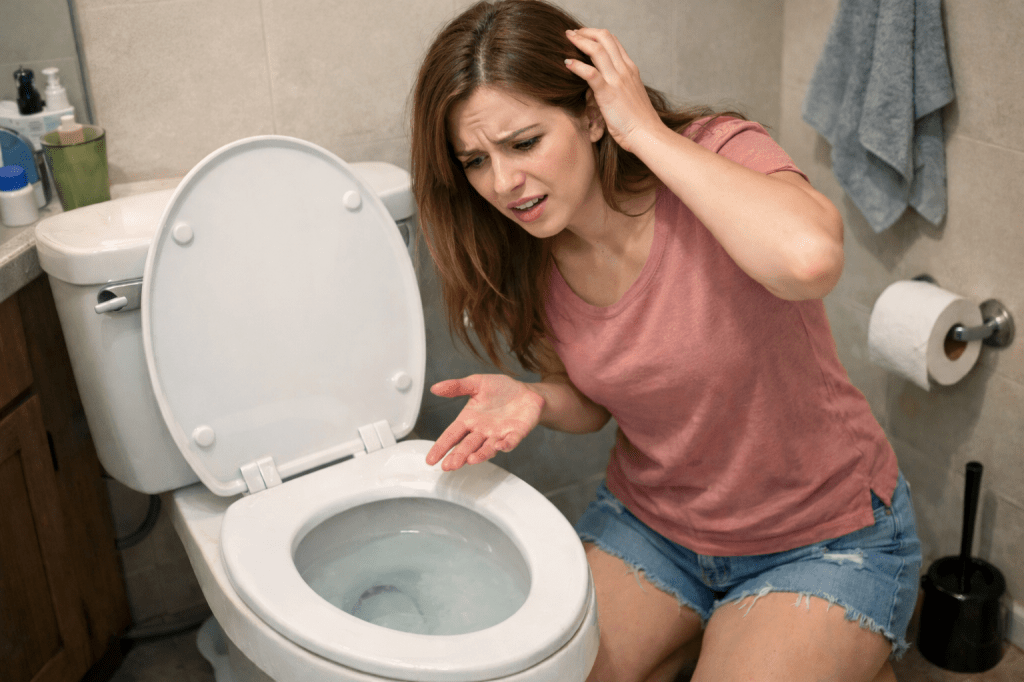
A clogged toilet can be annoying and messy. It may feel stressful or confusing. There are sensible first steps you can take to reduce the problem.
Why This Situation Matters
A clogged toilet may disrupt your day and limit bathroom use. It can cause water to rise and spill, which may lead to cleanup and extra work. Addressing it early can often keep the issue small and easier to manage.
What to Do Immediately
- Stop flushing. Repeated flushing may make the bowl overflow.
- Leave the lid down. This can help contain splashes and smells.
- Turn off the water supply if easy to reach. If you can get to the shut-off valve near the base without moving heavy items, closing it may prevent overflow.
- Clear the area. Move rugs, towels, and small items away from the toilet. Keep children and pets out of the room.
- Look for obvious blockage. Check the bowl from a safe distance to see if there is visible material near the top, but avoid reaching in.
Things to Avoid
- Do not flush again and again. This can make overflowing more likely.
- Do not pour large amounts of water quickly. That may cause spills.
- Do not use sharp tools or wire hangers. These can scratch the bowl or push the clog further.
- Do not stand or sit on the toilet lid. That can be unsafe and may cause damage.
- Do not mix chemical cleaners. Combining products may be hazardous.
What to Do Next
Keep an eye on the toilet for a little while. If the water level drops, the clog may be moving along. You may choose to use a plunger that is meant for toilets, following the product’s directions. If you live in an apartment or have building maintenance, consider contacting them. You may also check the toilet maker’s care advice or your home manual for simple suggestions. Take a photo or note what happened and when, in case you need to explain the problem later.
When to Get Professional Help
Professional help may be appropriate if the clog does not clear after simple steps, if water continues to rise, or if you notice leaks around the base. For persistent or recurring clogs, consider contacting a licensed plumber, building maintenance, or your service provider. If you see water damage or serious leaks, a professional can assess and help prevent further issues.
Quick Summary
- Stop flushing and leave the lid down to reduce overflow risk.
- Turn off the toilet water if you can do so easily.
- Try simple, non-technical follow-up like a plunger or contacting maintenance.
- Get professional help if the problem continues, water keeps rising, or you see leaks.
About the Author
Situation Guide Editorial Team
The Situation Guide editorial team writes clear, practical guides for common real-world situations. Content focuses on safe first steps, plain-language explanations, and helping readers recognise when professional help may be appropriate. This guide provides general information only and is not a substitute for personalised professional advice. Specific circumstances can vary.
 Situation Guide
Leave a comment