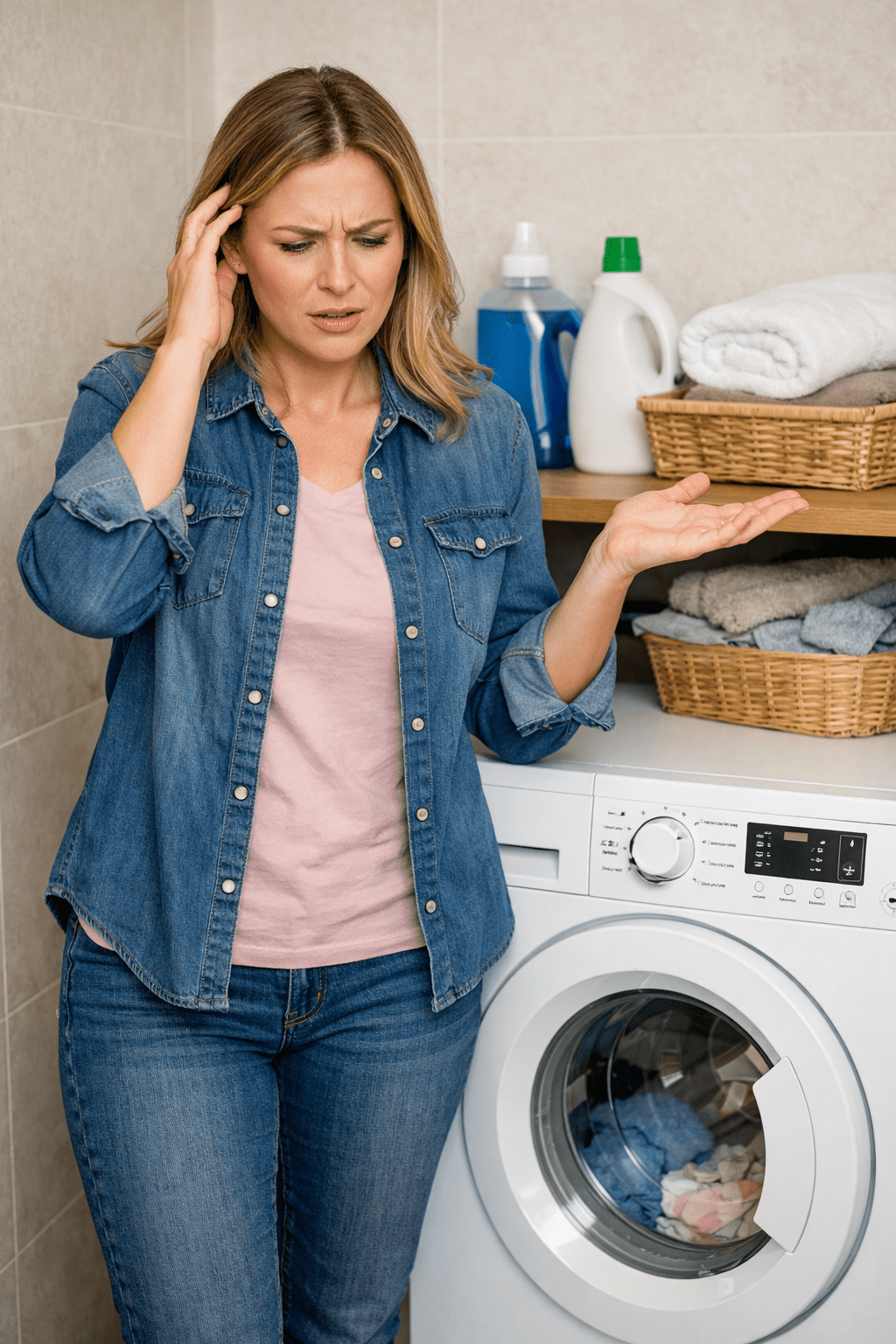
Your washing machine is not draining. This can be confusing and a bit frustrating. There are sensible first steps you can try to see if the problem clears up.
Why This Situation Matters
A washer that won’t drain can delay chores. Standing water can make clothes stay wet and smell musty. The issue may cause ongoing inconvenience or extra wear on the machine if left unchecked.
What to Do Immediately
- Stop the cycle — Press pause or cancel to halt the current program so the machine does not try to spin while water is standing.
- Turn off power — If it’s easy to reach, switch the machine off at the controls or unplug it. This may reset the electronics and is reversible.
- Open the door or lid — Only after the drum has stopped. Check how much water is inside and whether clothes are bunched up.
- Redistribute the load — Spread out heavy or soaked items so they balance better. Uneven loads can sometimes prevent draining.
- Look for visible hose kinks — From the front or back, without moving or disconnecting anything, check for obvious bends in the drain hose that may block flow.
Things to Avoid
- Forcing the door — Do not pry or slam the door open.
- Putting your hand into a running machine — Avoid reaching into the drum while power is on.
- Trying to open panels or remove parts — Don’t take off covers or attempt repairs you are not trained for.
- Tilting or moving the machine roughly — Avoid pushing, lifting, or standing on the appliance.
- Using sharp tools to clear drains — Do not poke inside hoses or openings with objects.
What to Do Next
Watch the machine for a short time after trying the steps above. Check the owner’s manual or any error codes on the display for guidance. Take a photo of the display or the setup if you plan to contact support. If the load was unbalanced, you may try a short spin or drain program once the machine is powered back on and the load is adjusted. Keep notes of what you tried and what changed.
When to Get Professional Help
Professional help may be appropriate if the problem continues, the machine makes unusual noises, there is leaking, or you notice electrical issues. In those cases, contacting a licensed appliance repair service, a plumber, or the manufacturer’s support team can be a sensible next step. They can assess the situation safely and suggest repairs if needed.
Quick Summary
- Stop and power off the machine, then check the water level and load.
- Redistribute clothes and look for obvious hose kinks without disconnecting anything.
- Avoid forcing doors, opening panels, or doing repairs yourself.
- Seek professional help if the issue persists, leaks occur, or you see signs of electrical trouble.
About the Author
Situation Guide Editorial Team
The Situation Guide editorial team writes clear, practical guides for common real-world situations. Content focuses on safe first steps, plain-language explanations, and helping readers recognise when professional help may be appropriate. This guide provides general information only and is not a substitute for personalised professional advice. Specific circumstances can vary.
 Situation Guide
Leave a comment