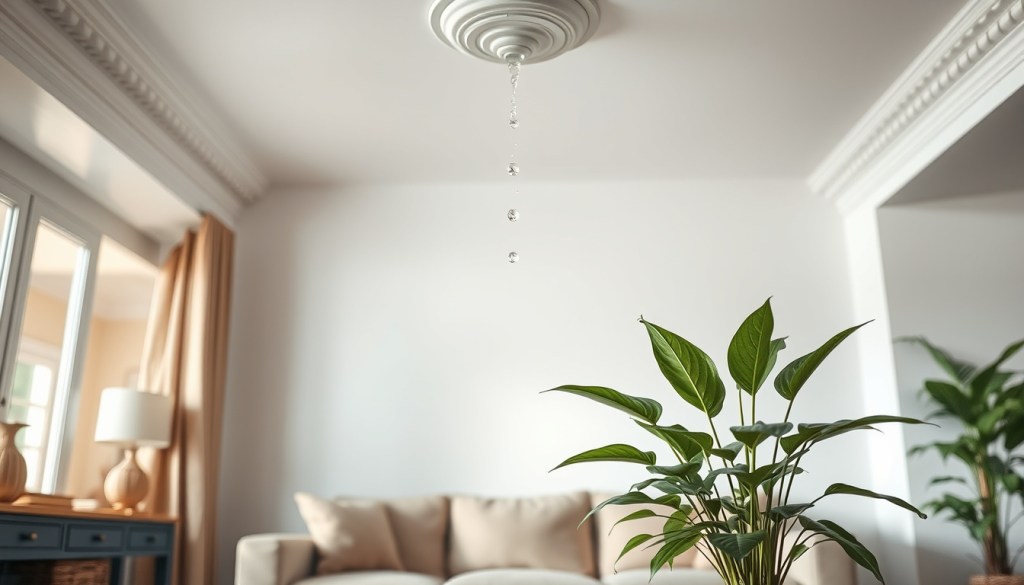
Water leaking from a ceiling can be surprising and upsetting. It may be hard to know what to do first. There are a few sensible steps you can take right away to limit damage and stay safe.
Why This Situation Matters
A ceiling leak can cause damage to walls, floors, and belongings. It may make living spaces less comfortable. Small leaks may get worse over time and can lead to extra work or expense if not checked.
What to Do Immediately
- Keep people and pets away, and avoid the wet area. Move family and pets out of the room until you know it is safe.
- Catch the water, using buckets, bowls, or pans. Place absorbent towels or rags to limit spreading.
- Protect furniture and items by moving them out or covering them with plastic or towels. Lift small items off the floor if you can.
- Observe the leak source, and note where the water is coming from and how fast it is dripping. Do not climb onto the roof or try to open the ceiling.
- Unplug nearby electronics, and avoid touching wet switches or outlets. If an appliance is wet, leave it unplugged until it can be checked.
Things to Avoid
- Do not poke or cut the ceiling — this can cause more damage.
- Do not stand directly under the leak if the ceiling feels soft or saggy.
- Do not use heat sources like hair dryers or space heaters on wet materials.
- Do not try roof or plumbing repairs yourself if you are not trained.
- Do not ignore water near electrical fittings or appliances.
What to Do Next
Watch the leak over time and note any changes. Take photos or short videos of the leak and of any damage. Contact your landlord or building manager if you rent. If you own the home, you may check your homeowner’s insurance guidance or contact your insurance provider for next steps. If the source seems to be from an upstairs apartment or from outside, let neighbors or the building manager know. Keep wet items separated and ventilate the area if it is safe to do so.
When to Get Professional Help
Professional help may be appropriate if the leak continues, increases, or affects electrical fixtures. Consider contacting a licensed plumber if the source is a pipe or plumbing fixture. A roofer may be appropriate if water seems to come from the roof. An electrician may be needed if outlets, switches, or lights are wet. For rental properties, the building manager or maintenance team can help arrange repairs. If you are unsure, a general tradesperson or your service provider may help assess the issue.
Quick Summary
- Move people and pets away and contain the water with buckets or towels.
- Protect furniture and unplug nearby electronics if safe to do so.
- Record the leak with photos and tell your landlord or insurer as needed.
- Seek a plumber, roofer, electrician, or building manager if the issue continues or involves wiring.
About the Author
Situation Guide Editorial Team
The Situation Guide editorial team writes clear, practical guides for common real-world situations. Content focuses on safe first steps, plain-language explanations, and helping readers recognise when professional help may be appropriate. This guide provides general information only and is not a substitute for personalised professional advice. Specific circumstances can vary.
 Situation Guide
Leave a comment