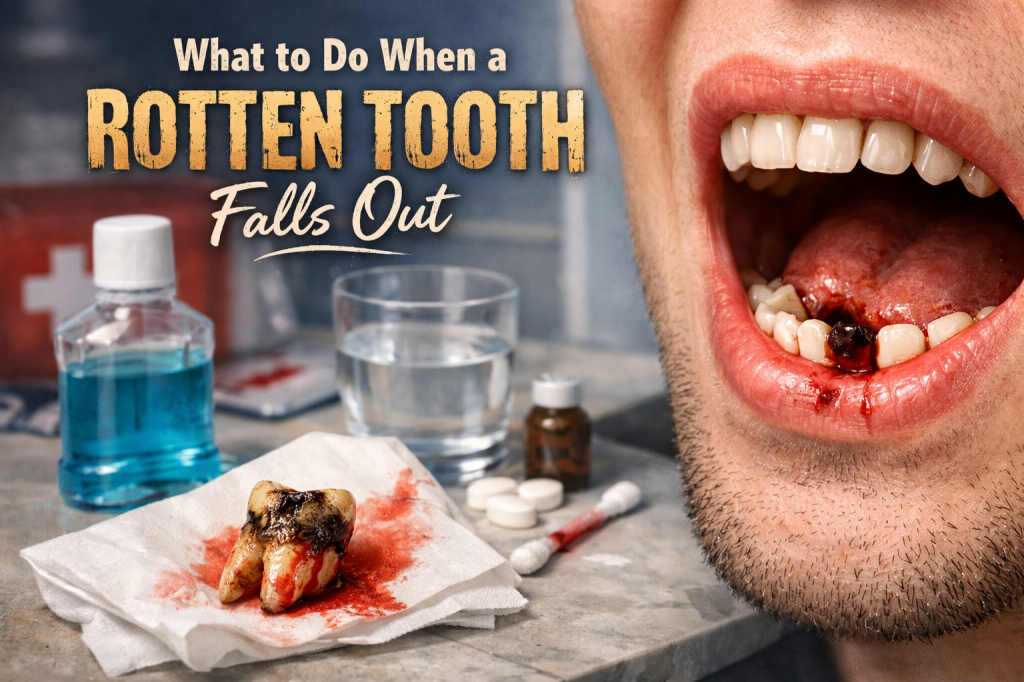
If a rotten or badly decayed tooth falls out, it can be shocking. You may notice a sudden gap, bleeding, a bad taste, or pain that feels different from before. This guide focuses on what helps right now, not on dental treatment plans or long-term fixes.
You don’t need to panic — but you do need to handle the next steps properly.
Quick Help: What to Do Right Now
If this just happened, start here:
- Rinse your mouth gently with warm salt water. This helps clean the area without irritating it.
- Apply light pressure if there’s bleeding. Use clean gauze or a cloth for 10–15 minutes.
- Avoid touching the socket with your fingers or tongue. This reduces infection risk.
Step 1: Do Not Try to Put the Tooth Back
If the tooth fell out due to decay, do not reinsert it.
Rotten teeth are usually not viable and pushing them back can:
- trap bacteria
- damage the socket
- increase infection risk
If you kept the tooth out of habit, place it in a clean container and bring it to the dentist only if asked.
Step 2: Protect the Area
After the tooth comes out, the exposed area is sensitive.
- Avoid chewing on that side
- Avoid hot, cold, or sugary foods
- Do not smoke or drink alcohol
If pain is present, over-the-counter pain relief may help, but avoid placing medication directly on the gum.
Step 3: Watch for Signs That Need Attention
Some discomfort is normal, but contact a dentist as soon as possible, especially if you notice:
- increasing pain or swelling
- pus or a strong bad smell
- fever or facial swelling
- ongoing bleeding
A fallen rotten tooth often means the surrounding tooth or bone was already compromised.
When It Happens Suddenly Without Pain
Sometimes a decayed tooth falls out with little or no pain.
This usually means:
- the nerve was already damaged
- infection may still be present
- surrounding teeth may be at risk
Lack of pain does not mean the problem is resolved.
What Usually Makes This Worse
- Ignoring the gap because pain has eased
- Picking at the socket
- Using home remedies or temporary glues
- Delaying dental care until swelling appears
Decay-related tooth loss rarely fixes itself.
If This Happens and You Can’t See a Dentist Immediately
If care is delayed:
- keep the area clean
- eat soft foods
- avoid pressure on the site
- monitor for swelling or fever
These steps help reduce risk, but they are not a substitute for dental treatment.
Quick Reminder Before You Move On
A rotten tooth falling out feels alarming, but it’s usually a sign that treatment was already needed. Acting calmly now helps prevent further pain or infection later.
Handling the next step is what matters most.
About the Author
Situation Guide Editorial Team
The Situation Guide editorial team writes clear, practical guides for common real-world situations. Content focuses on safe first steps, plain-language explanations, and helping readers recognise when professional help may be appropriate. This guide provides general information only and is not a substitute for personalised professional advice. Specific circumstances can vary.
 Situation Guide
Leave a comment